Research & Publications
Algorithms, studies, and white papers behind the CHIP estimate
CHIP Central quantifies the value of a CHIP — an independent measure anchored to human productivity, transcending national currencies and borders.
The popular narrative says AI will take all the jobs and drive wages to zero. We argue the opposite: AI and automation will raise the real value of human labor — but only if the tools remain open and accessible at competitive prices.
The fork in the road is competitive access, not technology. And the primary threat to competitive access is regulatory capture that entrenches incumbents.
The paper traces the argument from historical precedent through Baumol's cost disease to CHIP's evolution from a measured index to a market-discovered price — and makes the case that open AI is an economic prerequisite for the value of human time.
Workers access AI tools at competitive prices. Each hour of labor becomes vastly more productive. Reservation wages rise. New forms of "no-collar" work emerge.
AI tools are controlled by a few entities at monopoly prices. Workers are excluded from productivity gains and compete for whatever remains.
The same technology produces opposite outcomes. The question isn't "will AI take jobs?" — it's "will workers have access to AI at competitive prices?"
Credit Hour In Pool — a currency indexed to human productivity
A CHIP is an independent measure of value based on a single hour of standardized basic human labor. It is designed to be independent of the volatility associated with traditional world currencies.
The formal CHIP definition can be found in The MyCHIPs Papers. The CHIP is the basis for MyCHIPs, a new kind of digital currency that holds a more consistent value, is more efficient for consumers, and is resistant to corruption and manipulation.
Algorithms, studies, and white papers behind the CHIP estimate
A CHIP (Credit Hour In Pool) is a proposed unit for measuring value, indexed to one hour of unskilled human labor in a balanced global market. It is designed to be independent of the volatility of traditional currencies.
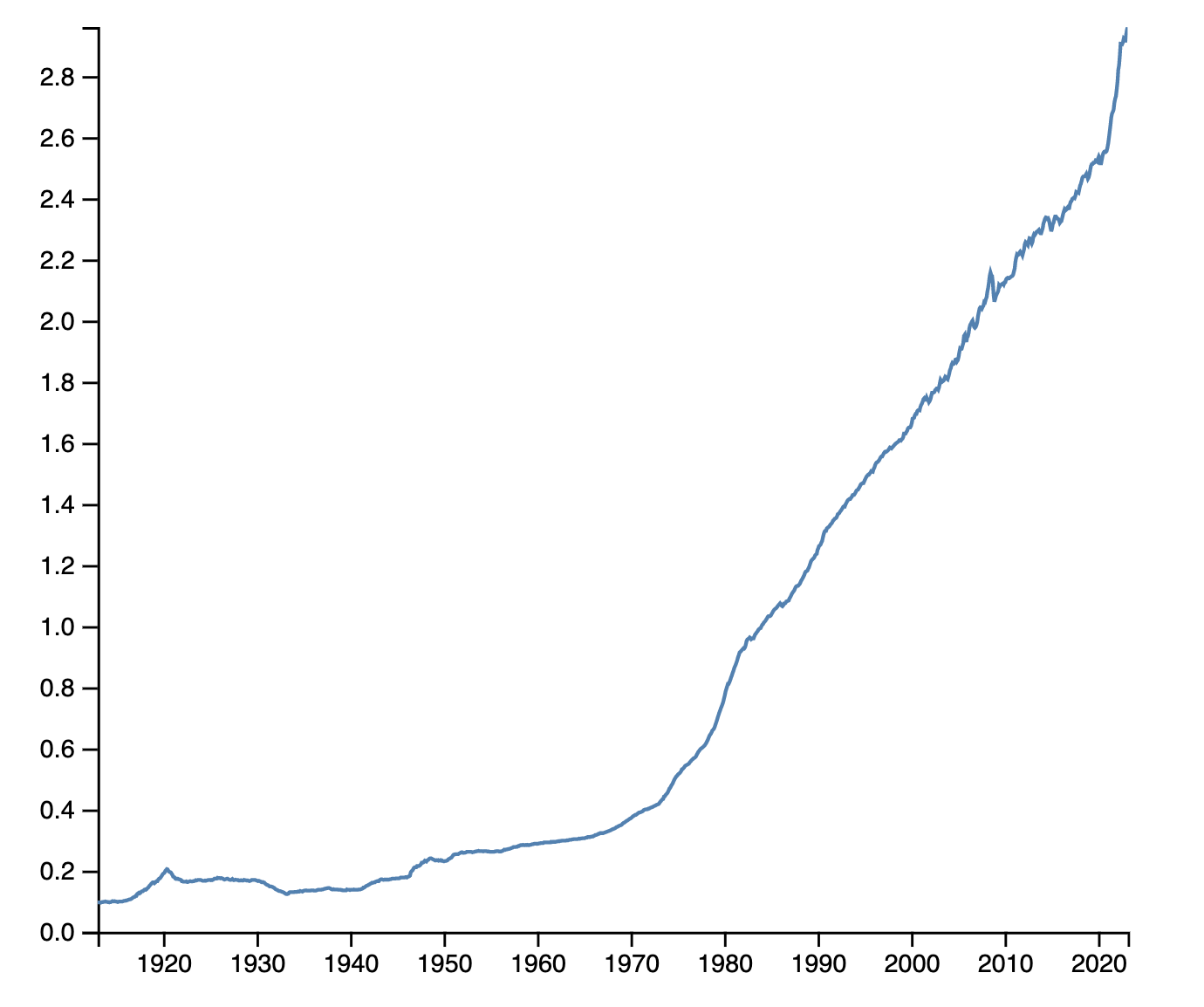
Using econometric models (Cobb-Douglas production functions) applied to panel data from dozens of countries, estimating the marginal product of unskilled labor and adjusting for market distortions. The base estimate of $2.53 (2019 dollars) is then adjusted for inflation to produce a current value.
We argue the opposite. AI amplifies labor productivity — each hour of human work becomes more valuable, not less. But this outcome depends on open access to AI tools at competitive prices. Read our full analysis.
All research code, data pipelines, and supporting documents are open source and available at github.com/gotchoices/chip.